
Learning and Development

What is Learning and Development?

Learning and Development (L&D) is the ongoing process of expanding employee knowledge, skills, and capabilities through targeted training and professional growth. It helps organisations build the expertise their teams need to perform effectively today and adapt to future industry shifts.


Modern Workplace Education

Modern L&D goes far beyond delivering basic training courses. It connects education with daily responsibilities and long-term career progression, giving employees opportunities to learn, practice, and develop in ways that support both personal success and broader business goals.
learning-and-development-employee-development

ISL Eco-System

ISL provides Learning and Development solutions tailored to this holistic approach, ranging from digital eLearning, coaching, and mentoring to advanced leadership programs and self-directed study. Unlike traditional one-off training, our strategic Learning and Development framework takes a long-term approach to help staff excel in current roles while preparing for changing responsibilities.


Strategic Benefits

An effective L&D strategy can help organisations:

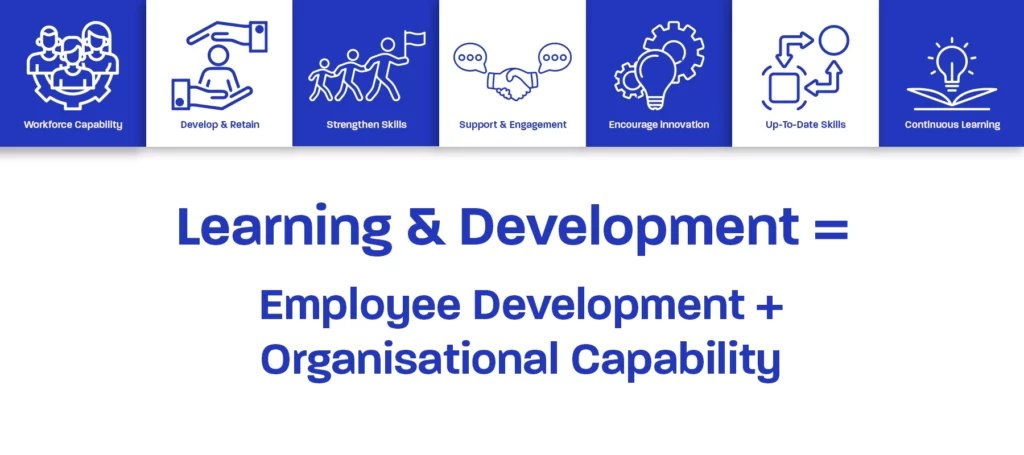
  • Build workforce capability
  • Develop and retain talent
  • Strengthen leadership pipelines
  • Support employee engagement
  • Encourage innovation
  • Address changing skills needs
  • Create a culture of continuous learning
Why is Learning and Development Important?

Workplaces continue to change through Artificial Intelligence (AI), automation, digital transformation and evolving customer & business requirements. As roles change, employees need opportunities to develop new capabilities and apply their knowledge in different situations.

Effective L&D combines targeted training with continuous learning so employees can build capabilities and apply them as their roles evolve.

Leadership Development

Professional Certifications

Collaborative Learning

Self-Directed Learning

Practical Application

Skills Development

Learning vs Training

Learning and training are closely connected, but they serve different purposes.

Learning

Learning is the broader, ongoing process of developing knowledge, skills and capabilities through study, experience, practice and interaction. It supports an employee’s overall professional development rather than focusing on a single task or role.

Learning can include eLearning, coaching, mentoring, professional development, collaborative learning and practical experience.

Training

Training is more specific and targeted towards developing the knowledge or skills required for a particular role, task or business objective. It is often structured around a defined learning outcome and timeframe.

What is eLearning?

eLearning is the delivery of education, training and professional development through digital technologies. Instead of relying solely on classroom-based sessions, employees can access courses, videos, assessments and other learning resources through online platforms.

Digital learning can provide employees with flexible access to learning at work, remotely or while on the move.

For organisations, digital learning can make training more accessible, consistent and scalable across teams, locations and roles. Depending on the learning environment, eLearning can support:

Interactive online courses

Video-based learning

Assessments and quizzes

Personalised learning experiences

Mobile learning

Learning pathways

Skills development

Learning analytics and reporting

Why Organisations Use eLearning

Traditional classroom training can be difficult to scale when employees work across different locations, have competing schedules or require ongoing development.

E-Learning provides a more flexible approach by allowing employees to access relevant learning when it suits their role and circumstances.

Key benefits:

Flexible Learning

Employees can access learning at a convenient time and pace, supporting different working environments and learning preferences.

Scalable Training

Digital learning can be delivered consistently across departments, locations and larger workforces without requiring every session to take place in person.

Consistent Knowledge

Organisations can provide employees with structured learning resources and maintain a consistent approach to important knowledge and processes.

Measurable Learning

Digital learning environments can provide data and insights into participation, progress and learning activity.

Continuous Development

Employees can revisit learning resources and continue developing their knowledge beyond a single training session.

Skills Development

Strengthen existing capabilities, develop new skills and prepare for changing responsibilities.

Performance and Productivity

Improve decision-making, solve problems more effectively and perform tasks with greater confidence.

Engagement and Retention

A culture that supports continuous development can contribute to stronger engagement, career progression and employee retention.

Upskilling and Reskilling

Both are increasingly important as technology, automation and changing business requirements reshape the skills organisations need.

Organisational Capability

Learning content provides knowledge. Skills development helps employees build capability. Practical application turns knowledge into performance, while sharing knowledge helps organisations retain and build on their internal expertise.

This shift from course consumption to capability development is becoming increasingly important as organisations prepare their workforce for changing technologies and skills requirements.

Read More

A Connected Approach to Learning.

Skills development and eLearning content creation address different parts of the L&D process, but together they contribute to a more connected learning ecosystem.

Organisations can create relevant learning content, provide employees with learning opportunities, develop skills and use learning insights to inform future development.

This helps move L&D beyond isolated training activities towards a more continuous approach to building workforce capability.

Frequently Asked Questions


1. What is Learning and Development?

Learning and Development (L&D) is the ongoing process of developing employees’ knowledge, skills and capabilities through learning, training and professional development. It can include eLearning, coaching, mentoring, leadership development and skills development.


2. What is the difference between learning and training?

Training generally focuses on specific knowledge or skills required for a particular role, task or objective. Learning is broader and continuous, supporting an employee’s overall knowledge, capabilities and professional development.


3. What is eLearning?

eLearning is the delivery of education, training and professional development through digital technologies. It allows employees to access digital courses, videos, assessments and other learning resources through online platforms.


4. What is a skills management platform?

A skills management platform helps organisations understand, develop and manage workforce skills. It can identify capability gaps, connect employees with relevant learning and provide greater visibility into workforce development.


5. What are the benefits of eLearning?

eLearning can provide flexible and scalable access to learning while helping organisations deliver consistent content, support continuous development and gain insights into learner progress and activity.


6. What is the difference between upskilling and reskilling?

Upskilling involves developing additional or advanced skills for an employee’s current role. Reskilling involves developing new skills that can prepare an employee for a different role or set of responsibilities.


7. How does L&D support business performance?

L&D can improve workforce capability, support employee performance, strengthen leadership development, encourage innovation and help organisations respond to changing skills requirements.